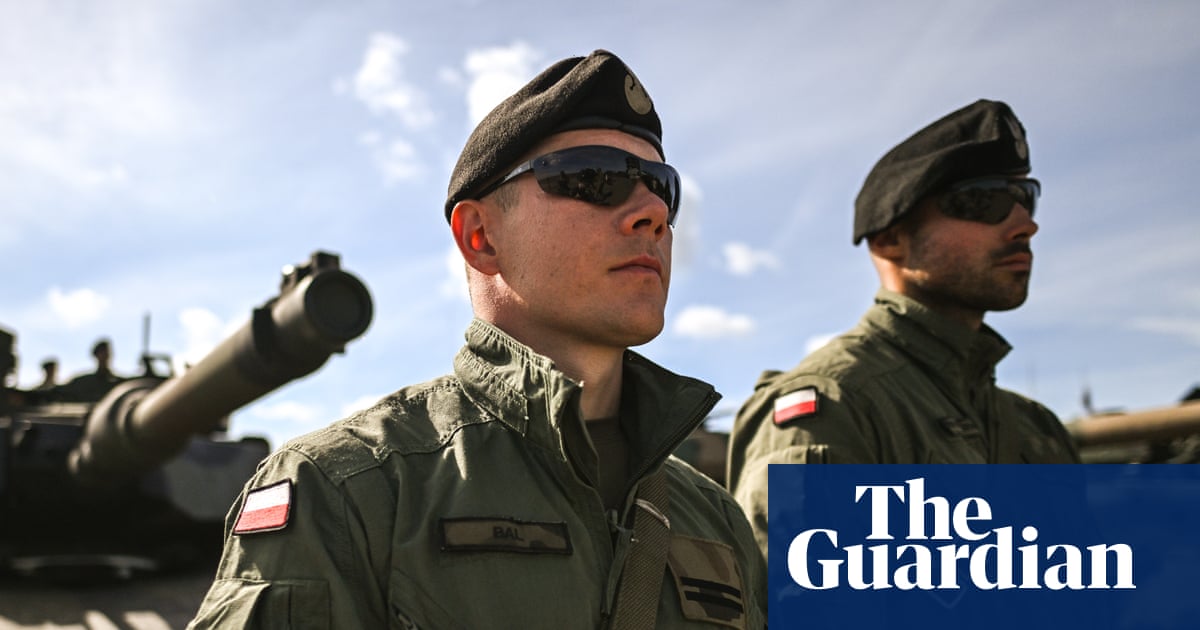
Poland is seeking to turn its military spending surge into an industrial boost, using international partnerships to expand domestic weapons production rather than relying solely on imports. Defence expenditure has risen from 2.2% of GDP before Russia’s 2022 invasion of Ukraine to 4.8% in 2026, according to The Guardian Business, putting pressure on public finances even as manufacturers expand.
The outlet puts Poland’s annual defence budget at $53bn (£39.8bn), behind only Germany, France and Italy within the EU. Warsaw has also secured €44bn (£38bn) in defence investment loans through the bloc’s Security Action for Europe programme, its largest single allocation. The government has promised to direct almost 90% of that funding towards domestic industry, with state-owned Polska Grupa Zbrojeniowa (PGZ) taking a leading role.
Foreign defence groups are helping build that capacity. Babcock is working with PGZ on the Miecznik frigate programme in Gdynia, while BAE Systems and PGZ subsidiary Mesko are partnering on an artillery plant near Katowice. MBDA opened a weapons facility in Czosnów in September. Its Polish subsidiary’s managing director, Jim Price, described a shift towards local manufacturing, with investment creating jobs in Poland.
Ammunition output is another priority. Poland plans three new munition factories by 2028. During an August visit to Mesko, prime minister Donald Tusk said the country’s production capacity for 155mm rounds had stood at just 5,000 in 2023. Output is set to reach 30,000 this year, with a target of 200,000 annually within two years, The Guardian Business reported.
However, substantial orders still go to US suppliers of Patriot missiles, Abrams tanks and F-35 aircraft. The International Monetary Fund warned in March that the economic benefits of European defence investment would not necessarily accrue to the countries financing it. Meanwhile, military expenditure is contributing to a projected Polish fiscal deficit of 7.1% of GDP next year, expected to be the EU’s largest. ING economist Leszek Kąsek questioned the sustainability of the fiscal trajectory, highlighting the tension between military readiness and maintaining Poland’s economic expansion.