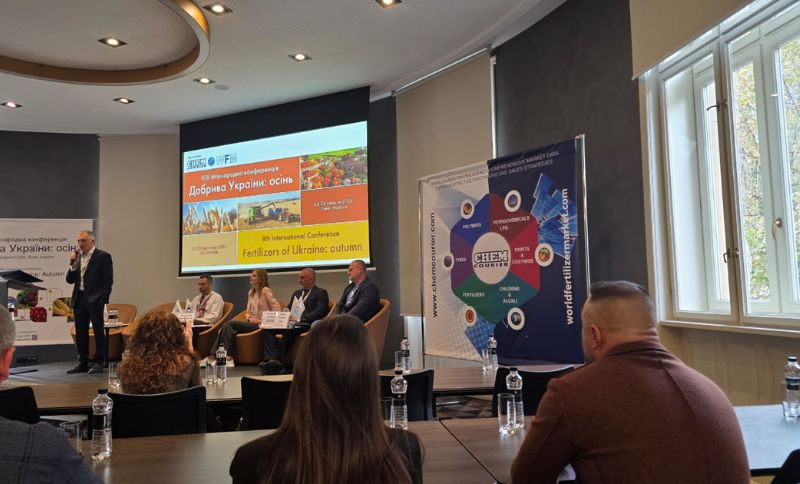
Pressure on Ukraine’s fertiliser supplies formed part of discussions at the eighth International Conference Fertilizers of Ukraine: Autumn 2026 in Lviv, according to an account published by Alkagesta Media. The event brought together producers, traders, distributors, agricultural businesses and logistics operators to examine conditions in the sector and the outlook for the Ukrainian market in 2027.
The conference agenda covered global and regional influences on fertiliser prices, alongside imports, domestic production and logistics difficulties. According to the company’s report, participants considered the current state of the industry as well as its prospects for the following year. The gathering spanned a two-day programme, bringing together businesses involved in producing, moving, distributing and using fertilisers across Ukraine’s agricultural sector.
Alkagesta said its representative was Elchin Aliyev, its regional commodity trader for Ukraine. During the programme, he engaged with major agricultural holdings, fertiliser manufacturers, importers, distributors and terminal operators, as well as other industry stakeholders. The company’s account describes those contacts as part of its participation in the forum, without detailing individual discussions or commercial outcomes.
The report characterised Ukraine’s fertiliser market as facing substantial structural pressures. Import prices for key nitrogen products had risen sharply compared with a year earlier, Alkagesta Media said, while infrastructure disruption continued to constrain domestic production capacity. It also attributed a shortfall in fertiliser supply to the war and disruption to supply chains. The account did not provide figures for the price increases or the supply deficit.
Alkagesta linked those challenges to what it described as a need for businesses with capabilities across several commodities and established European supply networks. In presenting its own role, the company pointed to its activities in petroleum products, biofuels and fertilisers, together with the supply-chain networks it said it had built across the region.