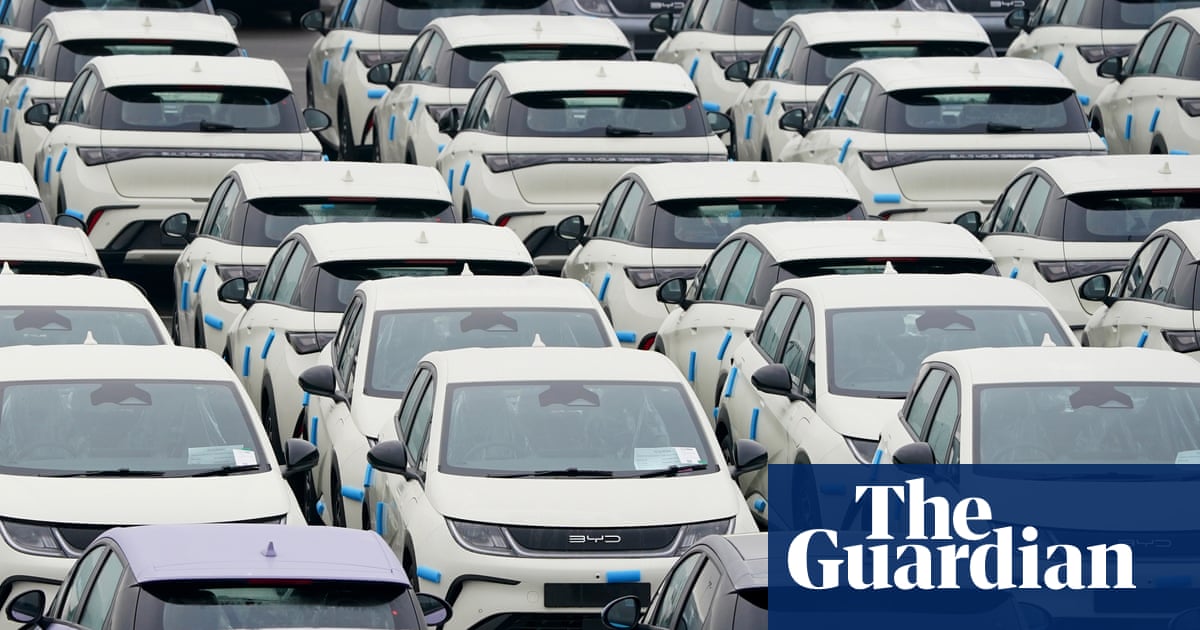
A sharp rise in sales of Chinese-made hybrid cars is prompting Brussels to consider further trade safeguards, as European manufacturers face growing competition from vehicles outside the scope of the EU’s electric car tariffs. The Guardian Business reported that the bloc has asked China to curb hybrid exports voluntarily or face measures likely to include quotas.
Eurostat data cited by the newspaper show that Chinese-made full hybrid sales reached 160,662 in the first seven months of this year, compared with just 659 during 2022. Sales of plug-in hybrids, which can also recharge from an external electricity supply, climbed from 56,706 in 2022 to 217,764 between January and July. The expansion follows the EU’s introduction of anti-subsidy duties on fully electric cars from China in 2024; hybrids were not covered.
Germany’s automotive industry signalled on Thursday that it would consider tariffs specifically targeting Chinese hybrids, according to The Guardian Business. Its industry association, VDA, urged the European Commission to assess comprehensively the effects of possible safeguards, including quotas, minimum prices and duties. The association argued that trade defence measures compliant with World Trade Organization rules should be considered where unfair practices have been established.
Figures from the European Automobile Manufacturers’ Association show hybrids now represent almost 37% of the overall market, against just over 21% for electric cars. BYD, Chery and Leapmotor recorded triple-digit EU sales growth. Geely remained the leading Chinese manufacturer, with sales rising 8% to 205,000 vehicles in the first eight months of the year, while BYD’s sales increased 163% year on year to 177,000. European groups nevertheless retain their dominance: Volkswagen group sold 2m vehicles over the first eight months.
The pressure over cars comes amid wider tensions in EU-China trade. European Commission president Ursula von der Leyen said earlier this month that the bloc’s €1.18bn daily trade deficit with China had become unsustainable. EU trade commissioner Maroš Šefčovič and Chinese counterpart Wang Wentao are due to meet on 8 and 9 October in an effort to ease the dispute.