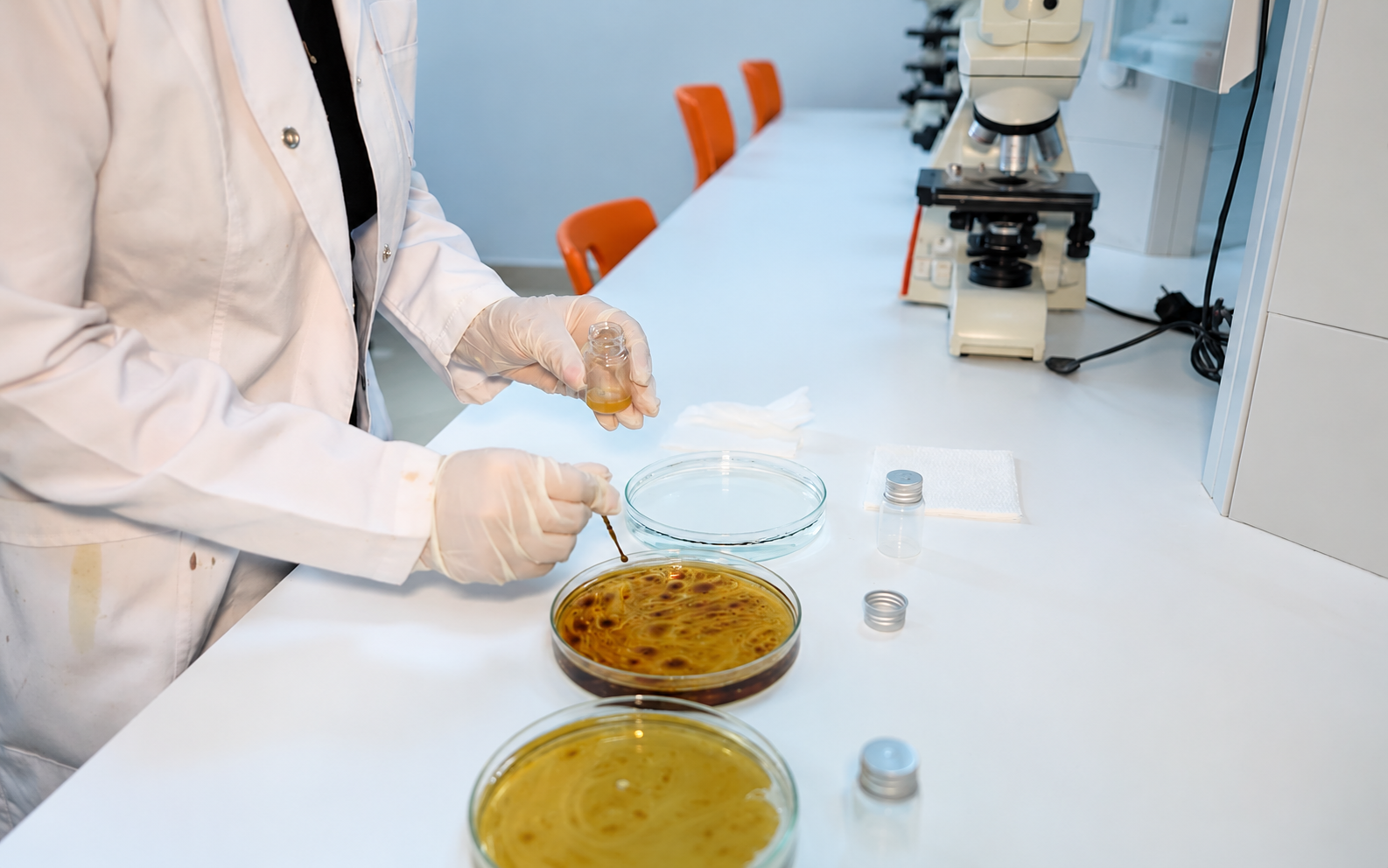
Clean Caspian, an environmental research start-up backed by Alkagesta, has completed the first phase of its development, according to Alkagesta Media. The project is working on oil-spill remediation technologies for enclosed marine ecosystems. Its initial phase focused on developing and testing two formulations in the laboratory, with further optimisation and testing still planned before the research progresses towards practical applications.
The work was completed by co-founders Aynura Mammadova and Narmin Ismayilova. Mammadova is a student researcher on the University of Padova’s master’s programme in Sustainable Chemistry and Technologies for Circular Economy, while Ismayilova is a researcher and instructor at Baku Engineering University. According to the report, part of the research drew on laboratory resources and scientific expertise in both Azerbaijan and Italy.
Laboratory testing identified the chemical compositions considered most promising for the two products. Alkagesta Media said Oil-Collecting Reagent-1 performed effectively in localising thin layers of oil, while Flocculant–Coagulant-1 showed strong results in destabilising oil-in-water emulsions. Some of the work on the latter formulation took place at the University of Padova. The reported results concern laboratory performance, with testing under a wider range of environmental conditions among the next steps.
The project’s academic supervisor, who was not named in the report, described the team’s approach as scientifically rigorous and said it had moved from concept development to laboratory validation in a relatively short time. The supervisor also credited Alkagesta’s industry knowledge and collaboration with helping direct the research towards practical operational and environmental problems, according to the company’s media outlet.
Following completion of the first phase, Clean Caspian intends to refine both formulations and carry out additional tests under different environmental conditions. The team will also continue the patent application process. Those activities form the next stage of work on the two technologies, rather than a reported commercial rollout.