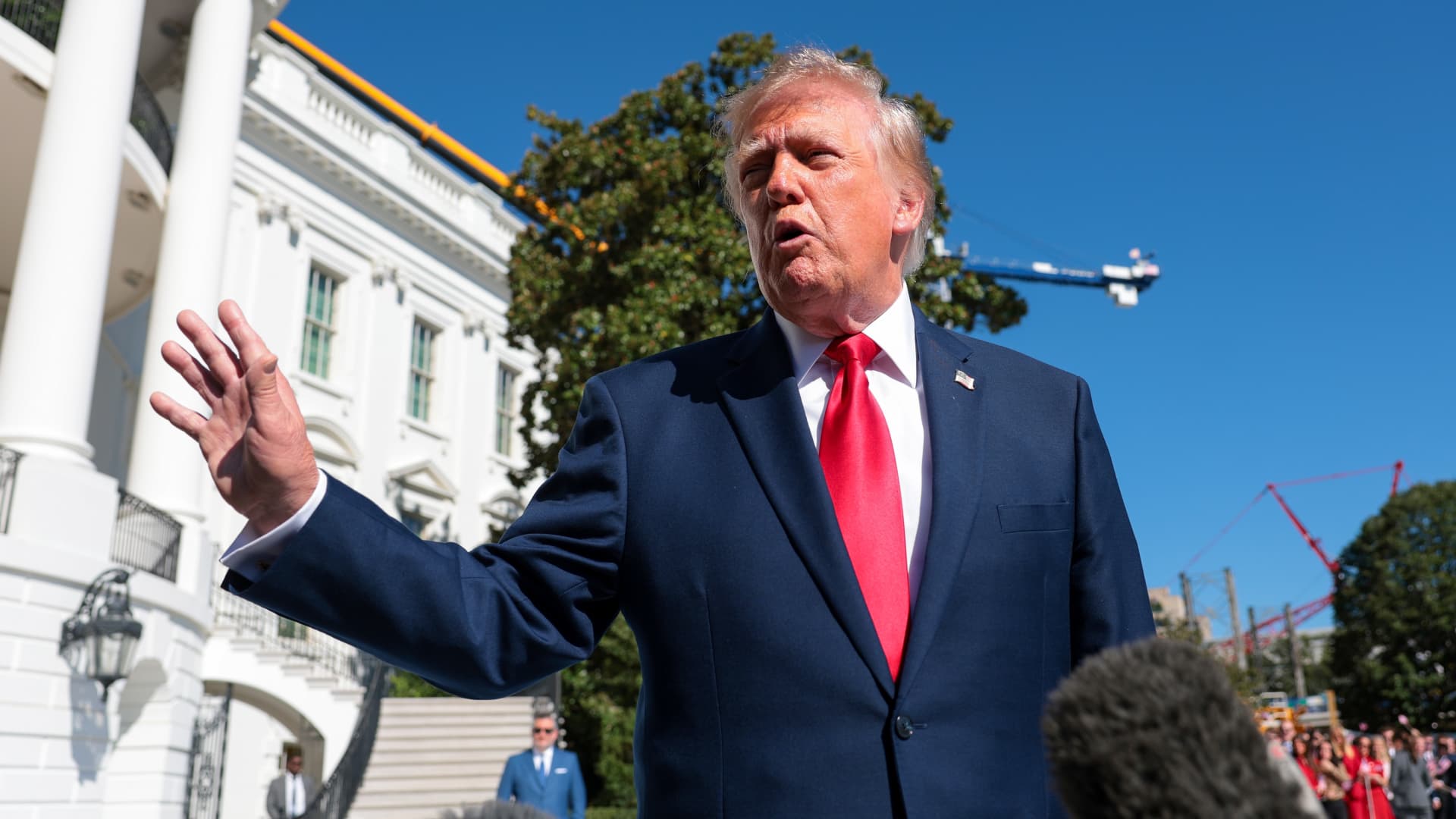
US President Donald Trump has signalled that he is no longer keen to reach an agreement with Iran, as reports of preparations for possible renewed US strikes put the country's energy infrastructure in focus. CNBC World Economy reported that the remarks came with crude prices still elevated, even as oil exports from the Middle East recovered towards levels seen before the war.
Speaking at a campaign rally alongside Republican candidates in San Antonio, Texas, late on Wednesday, Trump said an agreement was not something he particularly wanted, while asserting that Iran was prepared to make broad concessions to halt the conflict. He nevertheless praised the work of Steve Witkoff, the US special envoy to the Middle East, who has been pursuing a deal.
According to NBC News, cited by CNBC, Trump and his national security team have considered restarting large-scale military operations in the coming weeks. That report drew on a US official and another person familiar with the discussions. Axios separately reported that renewed fighting could involve extensive bombing of Iranian energy facilities, infrastructure and nuclear targets, and could affect the forthcoming midterm elections. The reports described possible operations rather than an announced decision to launch strikes.
The uncertainty comes against a difficult domestic backdrop for Trump. CNBC reported that his approval ratings had reached a record low amid anxiety over living costs, driven by sharply higher petrol and diesel prices. Diplomatic messaging also remained at odds: after Trump said Washington did not know who was in charge in Iran, Iranian foreign ministry spokesperson Esmaeli Baghaei countered that conflicting signals from US officials were the problem.
Meanwhile, Kpler data cited by CNBC put combined crude flows out of the Gulf, excluding Iran, together with volumes from Saudi Arabia and the United Arab Emirates, at roughly the pre-conflict level of 18.5 million barrels a day. Kpler lead freight analyst Matt Wright expects a gradual and uneven recovery in traffic even if fighting continues, with operational adjustments supporting normalisation rather than a diplomatic agreement being a prerequisite.