Donald Trump’s agreement with Vladimir Putin to temporarily ease sanctions on Russian diesel is unlikely to provide significant relief from high fuel prices, analysts told The Guardian Economics. They said the proposed shipments were small relative to US consumption, would take weeks to arrive and could fall short of the promised volumes because of damage to Russian refineries.
The package announced by Trump on Friday envisages an initial release of 300,000 tonnes for US and international markets, followed by 500,000 tonnes in November and another 1m tonnes subsequently. According to the Guardian’s calculations using US Energy Information Administration data, the first allocation represents roughly three-quarters of a single day’s US diesel use. Trump presented the agreement as a way to cut costs for farmers, ranchers and truckers.
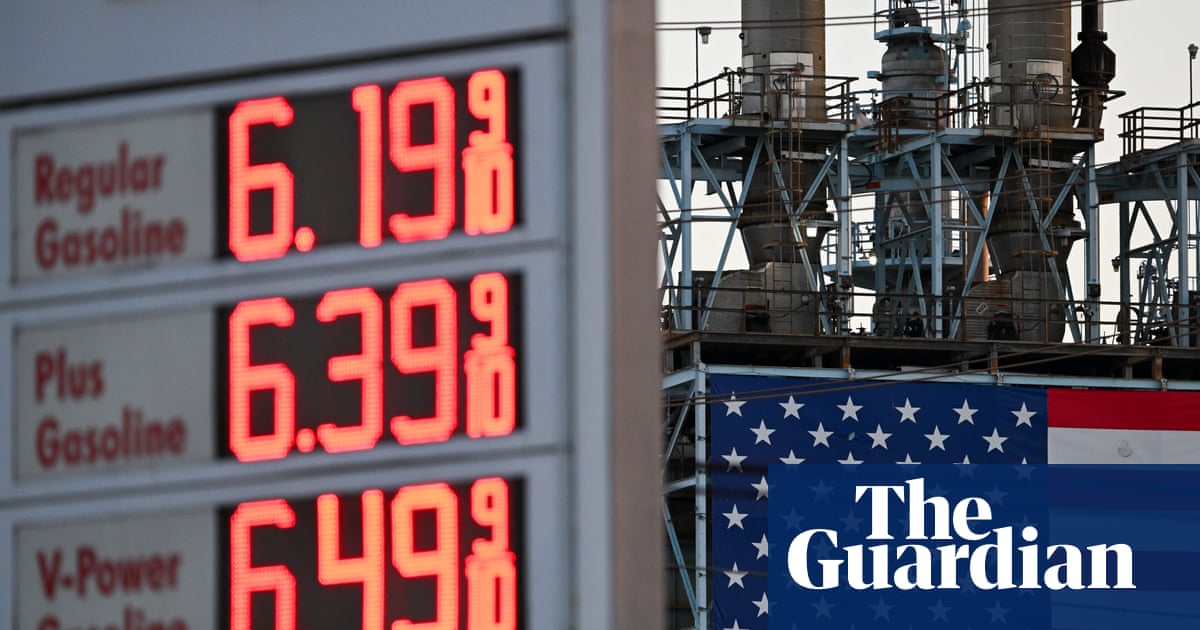
The announcement comes amid a sharp rise in fuel costs following the US war against Iran. American Automobile Association figures cited by the Guardian put US diesel prices at about $6.30 a gallon, an increase of almost 70% since the conflict began. In Britain, average diesel prices reached a record £2 a litre earlier in October before slipping just below that level on Friday.
Ashley Kelty, an energy analyst at investment bank Panmure Liberum, said the initial shipment was too small to influence prices. Chartering ships, loading cargoes and transporting them to the US would take about three weeks, he estimated, bringing deliveries close to the end of the month and roughly a week before the midterm elections. Treasury secretary Scott Bessent nevertheless argued on Sunday that the agreement would lower diesel costs.
Kelty also warned of compliance complications for multinational businesses needing to identify Russian-origin supplies that could remain subject to sanctions elsewhere, including Europe. The Guardian reported that the US Treasury had suspended sanctions on Russian diesel exports until 7 April while retaining restrictions on other Russian products.
Maximilian Hess, founder of Enmetena Advisory and a Foreign Policy Research Institute fellow, questioned whether Russia could fulfil the package because Ukrainian drone attacks had constrained its refining output. Separately, Volodymyr Zelenskyy said on Sunday that Ukraine could halt attacks on Russian refineries if Moscow reduced strikes on Ukrainian energy infrastructure. Trump later announced that both countries had agreed to an energy ceasefire.