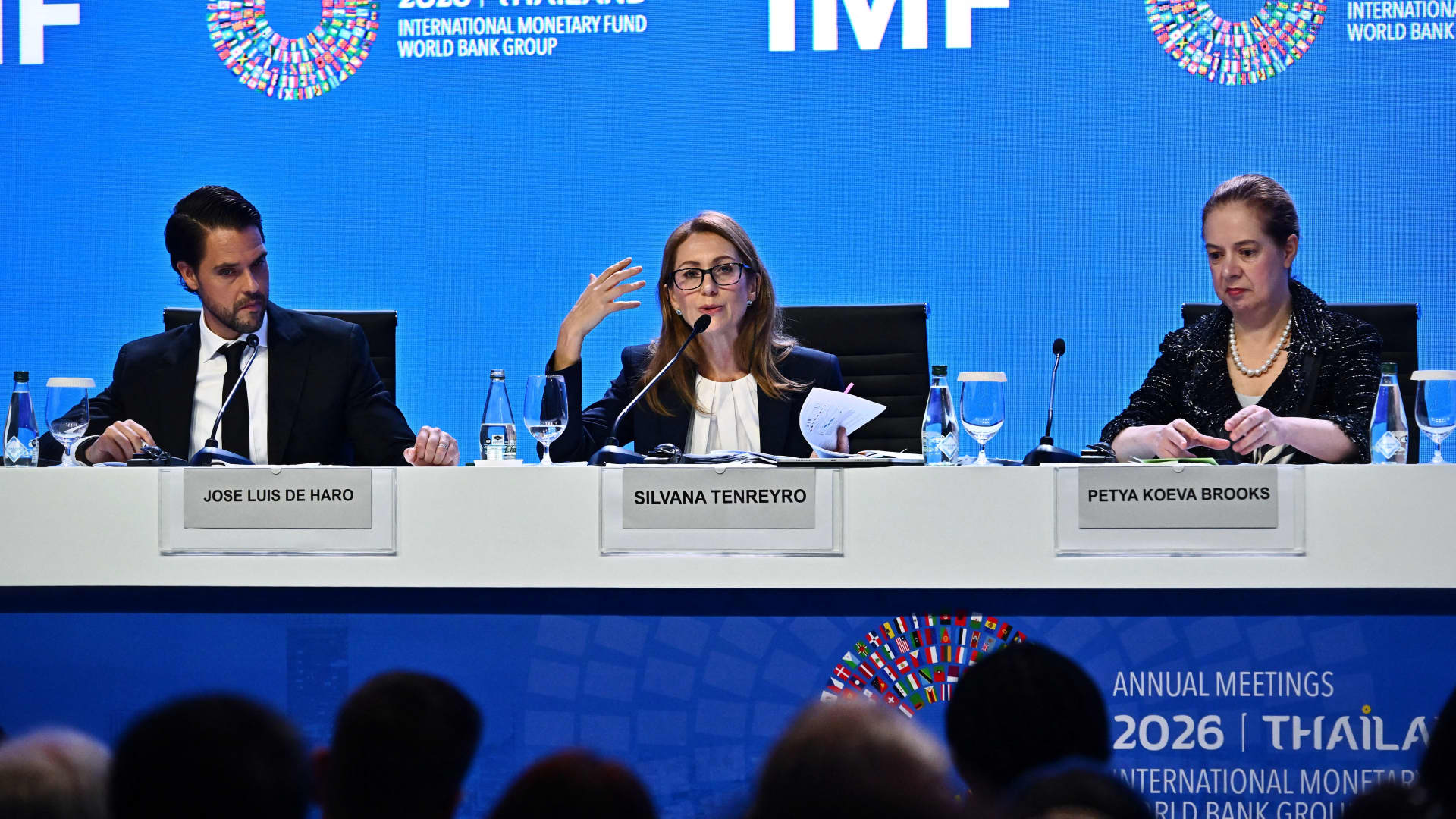
The International Monetary Fund has raised its 2026 global growth forecast as investment in artificial intelligence helps cushion the impact of higher energy costs, CNBC Economy reported. However, the fund warned that economies have less room to absorb further disruption from the Middle East war as oil stocks decline and government finances come under pressure.
The IMF now forecasts growth of 3.1% this year, compared with 3% in its July projections and 3.5% last year. Its 2027 estimate remains at 3.4%. Released at the IMF and World Bank annual meetings in Bangkok, the outlook leaves this year’s inflation forecast unchanged at 4.7%, while raising the estimate for 2027 to 4.1% from 3.9%.
A longer timetable for restoring shipping through the Strait of Hormuz underpins the inflation revision. The fund now assumes the waterway will reopen in March 2027, with pre-war conditions returning by October. Its July projections had assumed reopening by mid-July and a broader return to pre-war conditions by March 2027. Nevertheless, Gulf crude exports reached an average of 88% of pre-conflict levels in September as traffic increased, according to the IMF figures reported by CNBC Economy.
Alternative fuel supplies and withdrawals from strategic reserves have helped economies manage the energy shock. But the IMF estimates that global oil reserves are falling by about 2.7 million barrels a day, approaching levels that could produce abrupt price movements. Energy shortages could also undermine the AI investment boom that supported stronger-than-expected activity in the first half of the year.
The benefits of that investment are unevenly distributed. Semiconductor demand is helping Taiwan and South Korea, where the fund forecasts growth of 10.7% and 3.3% respectively this year. Energy importers outside the technology supply chain face rising import costs and weaker purchasing power. The euro zone is expected to grow by 1.1%, while the Middle East and Central Asia region is forecast to contract by 0.3%.
The IMF also cautioned that heavy spending on semiconductors, data centres and power generation is adding demand before widespread productivity improvements emerge. A reassessment of AI returns could therefore trigger investment cuts and equity losses. Silvana Tenreyro, the fund’s economic counsellor and research director, urged policymakers to rebuild fiscal capacity and strengthen supply-chain security, while keeping monetary policy restrictive enough to bring inflation back to target.